Welcome to the website for booklovers
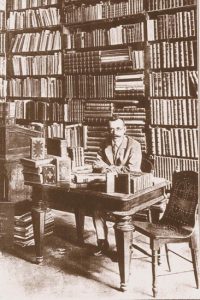 Since 1997, this site has been one of the world’s leading sources of information on book collecting and literature, including such topics as:
Advice on Antiquarian Book Values, Books and Bookmen, Caring for Your Book Collection, Enemies of Books, and the Love Affairs of a Bibliomaniac;
Along with new and old writings on Literature, such as the Outlines of English and American Literature by William J. Long and Books Fatal to Their Authors by P. H. Ditchfield, plus;
Articles on collecting playing cards, including identification guides for Bee and Bicycle, and information on Playing Cards and Tarot Cards;
Articles on Classic Era Postage Stamps, Philatelic Terms, and Creating a Philatelic Collection Plan, and;
A good bit of other information, on topics ranging from birthstones, chess, ghosts, hobbies, holidays (including Valentine’s Day, Halloween, Thanksgiving and Christmas), etiquette, music, personal growth, folklore and mythology, and much more.