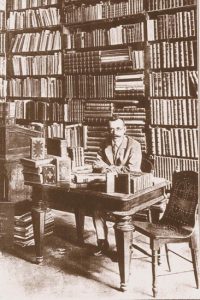
Allegri, Gregorio
ALLEGRI, GREGORIO, Italian priest and musical composer,
probably of the Correggio family, was born at Rome either in 1560 or in
1585. He studied music under G. Maria Nanini, the intimate friend of
Palestrina. Being intended for the church, he obtained a benefice in
the cathedral of Fermo. Here he composed a large number of motets and
sacred pieces, which, being brought under the notice of Pope Urban
VIII., obtained for him an appointment in the choir of the Sistine
Chapel at Rome. He held this from December 1629 till his death on the
18th of February 1652. His character seems to have been
singularly pure and benevolent. Among the musical compositions of
Allegri were two volumes of concerti, published in 1618 and 1619; two
volumes of motets, published in 1620 and 1621; besides a number of works
still in manuscript. He was one of the earliest composers for stringed
instruments, and Kircher has given one specimen of this class of his
works in the Musurgia. But the most celebrated composition of Allegri is
the Miserere, still annually performed in the Sistine Chapel at Rome.
It is written for two choirs, the one of five and the other of four
voices, and has obtained a celebrity which, if not entirely factitious,
is certainly not due to its intrinsic merits alone. The mystery in
which the composition was long enshrouded, no single copy being allowed
to reach the public, the place and circumstances of the performance, and
the added embellishments of the singers, account to a great degree for
much of the impressive effect of which all who have heard the music
speak. This view is confirmed by the fact that, when the music was
performed at Venice by permission of the pope, it produced so little
effect that the emperor Leopold I., at whose request the manuscript had
been sent, thought that something else had been substituted. In spite
of the precautions of the popes, the Miserere has long been public
property. In 1769 Mozart heard it and wrote it down, and in 1771 a copy
was procured and published in England by Dr Burney. The entire music
performed at Rome in Holy Week, Allegri’s Miserere included, has been
issued at Leipzig by Breitkopf and Hartel. Interesting accounts of the
impression produced by the performance at Rome may be found in the first
volume of Mendelssohn’s letters and in Miss Taylor’s Letters from Italy.
|


 |